Former Italian FM: Call for Investigation Into 1988 Iran Massacre of MEK
By Mansoureh Galestan
A former Italian Foreign Minister has called out the West for failing to recognize the blatant human rights abuses during the presidency of Hassan Rouhani, particularly towards member of Iranian Resistance group, the People’s Mujaheddin Organisation of Iran (PMOI/MEK), which is especially obvious in the recent appointment of Ebrahim Raisi as Head of the Iranian Judiciary.
Giulio Terzi, who has spoken at many MEK conferences and rallies over the years, explained that Raisi was a member of the Tehran Death Commission during the 1988 massacre of 30,000 political prisoners and was personally responsible for sending thousands of people to their deaths for peaceful activism, mostly MEK members.
Read more

Mass human rights violator appointed as Iran's judiciary chief
Today, Ali Khamenei, leader of Iran’s religious dictatorship, appointed Ebrahim Raisi, a member of the Death Committee in the massacre of 30,000 political prisoners in 1988, and a devoted supporter of the supreme leader, as head of Iran’s judiciary.
Raisi should be subject to international prosecution for committing crimes against humanity in the massacre of political prisoners in 1988, and tried for genocide of PMOI members. His appointment as the highest judicial authority of the clerical regime signals a hard turn to even more repression by the clerical regime against the Iranian people and resistance. Khamenei described his appointment as a "new era" and the “second stage” of the regime’s so-called revolution, and ordered Raisi not “to pay heed to outsiders when dealing with judicial matters.”
Read more

Maryam Rajavi: Referring the regime's crimes, especially the 1988 massacre, to the UN Security Council, is the Iranian people’s right and a prerequisite for peace
Immunity of criminals who are holding some of the highest government positions, the regime has been assured that its crimes in other parts of the world will also go unanswered.
Mrs. Maryam Rajavi, the President-elect of the National Council of Resistance of Iran, welcomed the adoption of the 65th UN resolution condemning the systematic and grave violations of human rights in Iran.
She said the adoption of this resolution “once again confirmed that the regime blatantly tramples upon the Iranian people’s most fundamental rights in all political, social and economic spheres.” “The Iranian regime is in no way congruous with the 21st century and must be isolated by the world community,” Mrs. Rajavi noted.
The UN resolution stresses the “alarmingly high frequency” of the use of the death penalty including against minors, “the widespread and systematic use of arbitrary detention,” poor prison conditions, “deliberately denying prisoners access to adequate medical treatment,” and “cases of suspicious deaths in custody.”
Mrs. Rajavi reiterated, “Although the resolution fails to address many aspects of the inhumane crimes committed by Iran's religious fascism, it leaves no doubt that this regime is the most brutal and aggressive violator of human rights in today's world. The inaction of the international community against the crimes of this regime has emboldened it to continue and spread these crimes, the latest example of which has been the barbaric raids on the residences of the Steel workers of Ahvaz and the arrest of dozens of those who demand their minimum rights.”
Read more

UN ADOPTS 65TH RESOLUTION CENSURING RIGHTS ABUSES IN IRAN
Maryam Rajavi: Iran’s ruling theocracy must be isolated by the world community, its dossiers referred to the UN Security Council, and its leaders face justice for crimes against humanity
“Condemning the systematic and gross violations of human rights by the theocratic regime ruling Iran, the UN resolution once again confirmed that the regime blatantly tramples upon the Iranian people’s most fundamental rights in all political, social and economic spheres,” said Mrs. Maryam Rajavi, the President-elect of the National Council of Resistance of Iran, in welcoming the 65th UN resolution condemning human rights abuses in Iran.
“The Iranian regime is in no way congruous with the 21st century and must be isolated by the world community,” Mrs. Rajavi added.
The UN resolution stresses the “alarmingly high frequency” of the use of the death penalty including against minors, “the widespread and systematic use of arbitrary detention,” poor prison conditions “deliberately denying prisoners access to adequate medical treatment,” and “cases of suspicious deaths in custody.”
Read more

UN Geneva, 30th Anniversary of 1988 Massacre in Iran
On Friday, September 14, 2018. 30 years after the massacre of 30000 political prisoners in Iran on 1988, a conference was held in European headquarters of the United Nations in Geneva, this conference was sponsored by the following Non-Governmental Organizations:
Read more

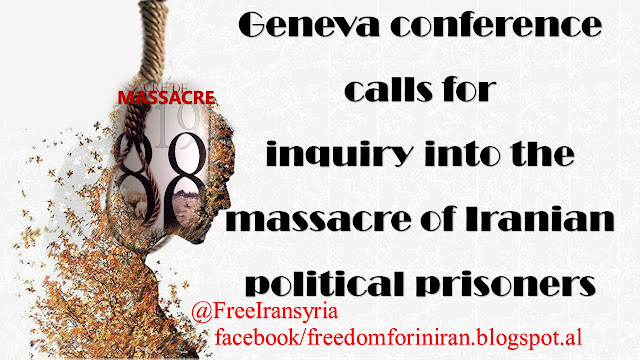
Geneva conference calls for inquiry into the massacre of Iranian political prisoners
In a conference held in Geneva, Switzerland, dignitaries, and politicians reiterated the need to investigate the execution of thousands of Iranian political prisoners in 1988 and to bring the perpetrators, many of whom continue to hold positions of power in the Iranian regime, to account.
At the time, Ruhollah Khomeini, then-Supreme Leader of the Iranian regime, issued a fatwa, in which he ordered all political prisoners affiliated with the PMOI/MEK to be executed unless they repented their support for the Iranian opposition group. Tens of thousands of political prisoners were tried in 15-minute trials and more than 30,000 people were executed in the span of a few months.
Read more
Maryam Rajavi, National Council of Resistance of Iran president, condemned Iranian authorities for ‘crimes against humanity’
30 years after Iran’s 1988 massacre, international action is necessary
Three decades have passed from the horrible summer of 1988 when Iranian regime founder Ruhollah Khomeini ordered the massacre of over 30,000 political prisoners, most of whom being members and supporters of the Iranian opposition People's Mojahedin Organization of Iran (PMOI/MEK).
Read more

WORLD EXCLUSIVE: JFK's nephew says terror state Iran can no longer 'co-exist with US'
American politician Mr Kennedy spoke to Daily Star Online on the eve of the 30th anniversary of the execution of an estimated 30,000 political prisoners by so-called Death Commission in Iran.
The former US Congressman – a member of political royalty the Kennedy family – warned of the threat the regime poses and branded it a “metropolis of Islamic extremism”.
He told Daily Star Online the world must stand beside protesters within Iran who are calling for the end of the regime ruled over by the Ayatollah
Read more

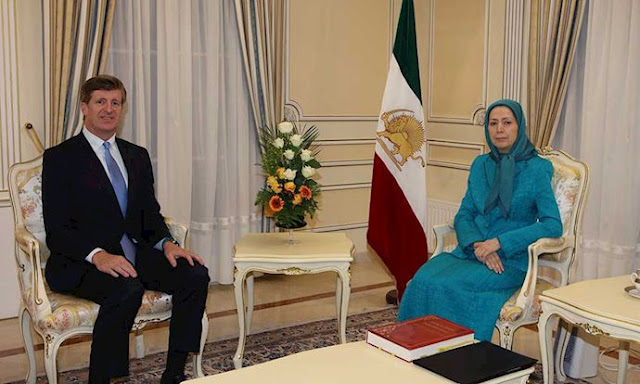
Iran Opposition President Meets with Mr. Patrick Kennedy
Iranian opposition President Maryam Rajavi welcomed former U.S. congressman Patrick Kennedy in Paris to discuss the Iranian regime’s critical situation, the continued protests and uprisings across the country, and the regime resorting to terrorism in the face of escalating domestic and international crises.
Read more
Iranian communities’ international conference in 20 cities commemorates 30th anniversary of 1988 massacre
Lending support to the uprisings for the overthrow of the Iranian regime and to the democratic alternative, the National Council of Resistance of Iran
Iranians commemorated the 30,000 political prisoners massacred in 1988 in Iran, in an online conference simultaneously held in 20 major cities and capitals of Europe and North America.
The participants declared support for the Iranian people’s uprising to overthrow the regime and for the National Council of Resistance of Iran as the regime’s democratic alternative.
Patrick Kennedy extended his salutes to the resistance units inside Iran and said the Iranian uprising today was rooted in the sacrifices of the heroes of 1988. He said the Iranian people have rejected the shah’s dictatorship and the mullahs’ theocracy, and seek a free republic. Patrick Kennedy called for the expulsion of all agents of the Iranian regime in Europe and the U.S. who are operating under various pretexts. He reiterated his support for the Iranian people’s resistance under the leadership of Mrs. Maryam Rajavi.
Read more

prosecute perpetrators of 1988 massacre and those in charge of four decades of crimes in Iran
Iranian communities’ global conference upholds 30th anniversary of the massacre of 30,000 political prisoners
A global video conference was held by Iranian communities on Saturday, August 25, 2018, to commemorate the 30th anniversary of the massacre of 30,000 political prisoners in Iran upon Khomeini’s decree for the genocide in 1988. The conference connected 20 cities in France, Germany, Britain, the Netherlands, Sweden, Norway, Denmark, Finland, Switzerland, Italy, Austria, Romania and Canada. A number of political dignitaries attended and addressed the conference where members and representatives of Iranian communities in Europe and Canada participated and delivered speeches. A number of eyewitnesses to the massacre and former political prisoners also testified at this event.
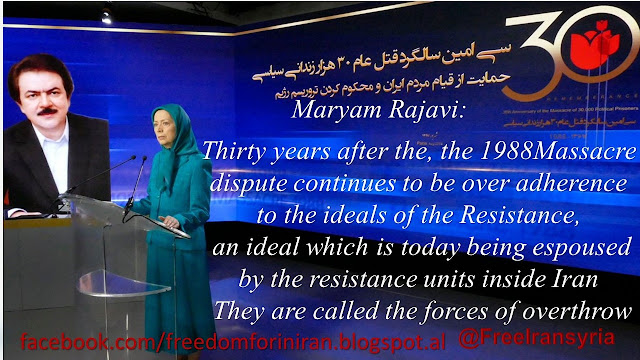
The conference started with remarks by Maryam Rajavi, honoring the heroes of 1988 and elaborating on their impact as an inspiration to the steadfastness of the organized Iranian Resistance for freedom and nationwide uprisings in Iran.
“For three decades, the international community has been silent over the massacre of political prisoners in Iran. As a result, the mullahs have continued with impunity to violate human rights in Iran, crack down on public protests, launch terrorist operations, and wage catastrophic wars in the Middle East and other countries. Now, the time has come to end this silence.”
These were part of the remarks made by Mrs. Maryam Rajavi, the President-elect of the National Council of Resistance of Iran
Link of the full text of her remarks
Link of the full text of the National Council of Resistance of Iran statment
Link of the full text of Patrick Kennedy

Iran Regime Arrests Family Members of the Victims of 1988 Massacre
Simultaneous with the 30th anniversary of the massacre of political prisoners in 1988, and while the nationwide uprising continues, the ruling religious fascism in Iran, in fear of the rise in Justice-Seeking Movement, has arrested a number of families of these martyrs.
In an instance in Gorgan, a number of family members of martyr Mohsen Mehrani, including Dr. Mojtaba Mehrani, dentist and 67 years old, Masih Mehrani, 62, and ladies Sousan Mehrani, 55, Mohaddaseh Mehrani, 50, and Elnaz, 28, (daughter of Mohaddaseh Mehrani), were arrested on July 19, 2018. There is no news about the detainees. Mohsen Mehrani was executed in 1988 during the massacre of political prisoners in Gorgan prison.
Read more

Iranian opposition president commemorates 1988 massacre victims
A conference held in the Paris District 1 City Hall on August 3 commemorated the memory of the victims of the 1988 massacre of 30,000 political prisoners in Iran. The conference was accompanied by an exhibition of the pictures of some of the victims and the mass graves where the Iranian regime has buried them.
During the conference, Jean Francois Legaret, mayor of Paris’ 1st District, and other speakers underscored the necessity to conduct international investigation into this crime against humanity and to try the perpetrators of this crime in an international court of law.
In a message to the conference, Mrs. Maryam Rajavi, president-elect of the National Council of Resistance (NCRI), thanked the attendants for helping keep the memory of the murdered political prisoners alive.
READ MORE

Al Arabiya , 10 August 2018-
Taking stock of Iran’s crimes against humanity 30 years after 1988 massacre
On July 26, Amnesty International renewed its warning of many years that the theocratic regime in Iran is destroying all the evidence of 1988 massacre of political prisoners. Since the massacre the only visible proof of it are mass graves where bodies of the prisoners were piled up.
There is also a constant reminder for the rest of us that such heinous crime has not been thoroughly investigated by an independent international commission.
Read more

Iran Regime Destroy Mass Graves as Part of Cover-Up
The Iranian Regime has already begun destroying the mass graves of political prisoners secretly executed by the mullahs’ security forces in the 1980s, despite a plea from Amnesty International to halt the desecration and allow an investigation to take place.
On July 20, some of the relatives of those killed during the 1988 massacre of political prisoners, mainly members of the People’s Mojahedin Organisation of Iran (PMOI/MEK), visited one of the secret gravesites, located behind Behesht-Abad Cemetery in District 5 of the Padadshahr Padad area in the city of Ahvaz, only to find that the graves of their loved ones had been destroyed. The Ahvaz site served as the burial site for those killed during the 1988 massacre and for dissidents killed by the Regime between 1981 and 1984.
Read more
MEK activists expose Iranian regime’s efforts to destroy evidence of mass executions
In 1988, under the order of Iranian regime supreme leader Ruhollah Khomeini, the Iranian regime executed more than 30,000 political prisoners, the majority being members and supporters of PMOI/MEK.
At the time, the regime needed to eliminate the opposition to consolidate its power at one of its most critical moments. The victims were executed in the span of mere months and their bodies were tossed into mass graves scattered across Iran.
The regime thought it could keep the 1988 massacre silent. Since then, the MEK has tried to bring the world attention to this heinous crime, which the regime has constantly denied. But three decades later, its crimes are catching up with it. Since 2016, an international movement led by the MEK has been documenting and publishing details of the 1988 massacre and exposing the authorities who were involved in the crimes.
Read more


MARYAM RAJAVI’S MESSAGE TO THE EXHIBITION ON 1988 MASSACRE IN IRAN AT THE PARIS DISTRICT 1 CITY HALL
Thirty years are gone but not their memories. The memories of the victims of the 1988 massacre continue to awaken the conscience of Iranian society and inspire them to rise. Those prisoners are continuing to have their impact. Their impact could be seen on two levels:
On the one hand, in the struggle against the ruling regime. We can see this in the Call-for-Justice movement. The movement has been expanding since two years ago when it started, and continues to grow. PMOI supporters obtained new documents on the massacre during this campaign. And the campaign has helped build tremendous pressure on the regime as if the massacre had taken place just recently.
In the past eight months, Iranian protesters have been remembering the steadfast political prisoners in their cities and how they were massacred for freedom. They remember their cause, what they sacrificed their lives for, and what their message is for today.
Just this week, the people of the cities of Karaj, Isfahan, Shiraz and several other cities of the country took to the streets and demonstrated against the mullahs. This movement has been persisting for eight months throughout the country.
This movement has alarmed the mullahs. To break out of this crisis, they planned a terrorist plot against the annual gathering of the Iranian Resistance in Paris on June 30. The terrorist operation failed to reach its goal but showed that the murderers of those 30,000 political prisoners stop at nothing to physically eliminate their opposition.
The West has remained silent over the past years on mullahs’ terrorism and on the massacre of political prisoners in Iran. So, the mullahs have found themselves immune to the international consequences of their crimes. The time has come to end such immunity.
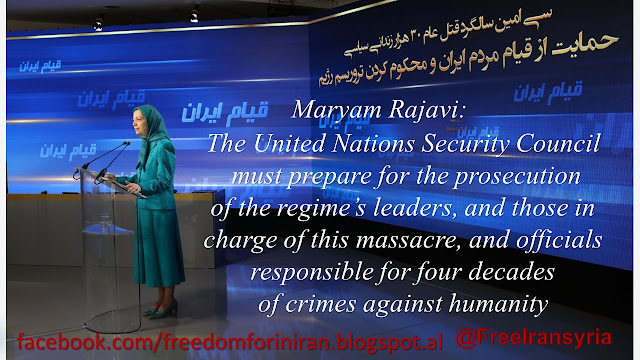
I hope that France would lead the initiative for a new drive to defend human rights in Iran and pursue the case of those massacred in 1988. It is absolutely essential that the UN High Commissioner for Human Rights starts an independent probe into this case and the UN Security Council prepares the arrangements for the prosecution of the leaders of the Iranian regime and those responsible for this massacre.
Read the full text

Dear compatriots,
The thirtieth anniversary of the massacre of 30,000 political prisoners in Iran, the red roses of freedom, is a day of taking pride for every freedom-loving Iranian and every Iranian protester who has opted to topple the mullahs’ religious dictatorship.
The PMOI members and other freedom-loving combatants who were massacred in 1988, stood tall when hanged from the gallows so that the Iranian nation could be proud in one of the darkest eras of her history.
Khomeini wished to remove every single trace of them, so that nothing would remain of their graves and even of their names. But they were neither forgotten nor silenced. To the contrary, they rose up again from fameless towns and cities, from Izeh, Doroud, Ghahdarijan, Touyserkan, Baneh, Kazerun and Chabahar, to fuel the flames of the uprising in December/January and spread the protests all across the country.
This is their nocturnal song whispering in our ears:
I am the bird of fire
I am burning in the flames of my blazing love
When I completely burn
and the flames of my restless spirit subside,
I will rise again
from below the ashes
and start life anew
Read more


#FreeIran #FreeIran2018 #Iranian gathering #IranRegimeChange
#1988 messacre #summer of 1988
Three Decades After Mass Executions In Iran – OpEd
Three decades ago, in the summer of 1988 Iranian regime committed the most heinous crime since World War II — It executed 30,000 political prisoners in the country’s prisons. Prisons were overcrowded with young men and women arrested on charges as ridiculous as reading a newspaper published by Iran’s main opposition and now an underground movement the People’s Mojahedin Organization of Iran (PMOI/MEK).
Read more
30th anniversary of 1988 massacre in Iran
Thirty years ago in the summer of 1988 Iranian regime under Khomeini committed a crime unprecedented since Second World War. In a few months 30000 political prisoners were executed in Iran. The prisoners were severing their sentences. The order was to exterminate all prisoners still believing in the People’s Mojahedin Organization of Iran (PMOI/MEK). The majority of prisoners were members and supporters of the MEK. The regime saw the MEK as its main rival and enemy.
A four members “Death Commission,” as it is famous among Iranian political prisoners oversaw the massacre of 30000 political prisoners in 1988.
Read more
The Red Carnation Speaks Out About 1988 Massacre
As autumn rain fell washing away the despairing soil, the earth gradually revealed in shame the shocking secret it bore within– the evidence of a monstrous crime.
During the summer of 1988, following a religious decree (fatwa) issued by Khomeini, the then-supreme leader of mullahs’ regime in Iran, over 30,000 political prisoners were murdered in a two-month nationwide execution spree.
The decree immediately sent anyone in prisons who would be considered an “enemy of Islam” to the gallows. No court hearing. No defense. And, no mercy.
The victims’ bodies were never delivered to the families. Instead, they were buried secretly overnight in mass graves at remote burial sites.
Read more
Related:
Iran is bulldozing the mass grave from the mullahs' 1988 massacre
A Call to Strip Immensities of the Perpetrators of the 1988 Massacre in Iran
Call for justice for the victims of the massacre of the political prisoners in 1988 in Iran
Iranian people,Join Justice-Seeking Movement
JUSTICE SEEKING MOVEMENT HAS SHAKEN UP THE REGIME RELYING ON MASSACRE
Political Prisoners seeks justice and call to Prosecute Perpetrators of Iran 1988 Massacre
Glorious Epics–what happened in jails during 1981 to 1988 Massacre?
Living lives of dignity, courage and freedom,the Women who Made History
Articles about 1988 Massacre in Iran
THE U.N. MUST INVESTIGATE IRAN'S 1988 MASSACRE, OR DETAINED PROTESTERS TODAY FACE SAME FATE
SEEKING JUSTICE FOR VICTIMS OF 1988 MASSACRE IS INDISPENSABLE FOR THE IRANIAN NATION’S CAMPAIGN TO OVERTHROW THE REGIME IN IRAN
The Rise in Justice-Seeking Movement for 1988 Massacre
IRAN-NCRI-IRANMASSACRE1988-The Tale of Red Roses a shocking video
Mass executions on the anniversary of massacre of political prisoners
#1998massacre-Untold story of Mahmood Hassani one of Iran's 30,000 political prisoners executed in summer of 1988
The 1988 massacre of political prisoners in Iran and the nuclear deal
By Mansoureh Galestan
A former Italian Foreign Minister has called out the West for failing to recognize the blatant human rights abuses during the presidency of Hassan Rouhani, particularly towards member of Iranian Resistance group, the People’s Mujaheddin Organisation of Iran (PMOI/MEK), which is especially obvious in the recent appointment of Ebrahim Raisi as Head of the Iranian Judiciary.
Giulio Terzi, who has spoken at many MEK conferences and rallies over the years, explained that Raisi was a member of the Tehran Death Commission during the 1988 massacre of 30,000 political prisoners and was personally responsible for sending thousands of people to their deaths for peaceful activism, mostly MEK members.
Read more

Mass human rights violator appointed as Iran's judiciary chief
Today, Ali Khamenei, leader of Iran’s religious dictatorship, appointed Ebrahim Raisi, a member of the Death Committee in the massacre of 30,000 political prisoners in 1988, and a devoted supporter of the supreme leader, as head of Iran’s judiciary.
Raisi should be subject to international prosecution for committing crimes against humanity in the massacre of political prisoners in 1988, and tried for genocide of PMOI members. His appointment as the highest judicial authority of the clerical regime signals a hard turn to even more repression by the clerical regime against the Iranian people and resistance. Khamenei described his appointment as a "new era" and the “second stage” of the regime’s so-called revolution, and ordered Raisi not “to pay heed to outsiders when dealing with judicial matters.”
Read more

Maryam Rajavi: Referring the regime's crimes, especially the 1988 massacre, to the UN Security Council, is the Iranian people’s right and a prerequisite for peace
Immunity of criminals who are holding some of the highest government positions, the regime has been assured that its crimes in other parts of the world will also go unanswered.
Mrs. Maryam Rajavi, the President-elect of the National Council of Resistance of Iran, welcomed the adoption of the 65th UN resolution condemning the systematic and grave violations of human rights in Iran.
She said the adoption of this resolution “once again confirmed that the regime blatantly tramples upon the Iranian people’s most fundamental rights in all political, social and economic spheres.” “The Iranian regime is in no way congruous with the 21st century and must be isolated by the world community,” Mrs. Rajavi noted.
The UN resolution stresses the “alarmingly high frequency” of the use of the death penalty including against minors, “the widespread and systematic use of arbitrary detention,” poor prison conditions, “deliberately denying prisoners access to adequate medical treatment,” and “cases of suspicious deaths in custody.”
Mrs. Rajavi reiterated, “Although the resolution fails to address many aspects of the inhumane crimes committed by Iran's religious fascism, it leaves no doubt that this regime is the most brutal and aggressive violator of human rights in today's world. The inaction of the international community against the crimes of this regime has emboldened it to continue and spread these crimes, the latest example of which has been the barbaric raids on the residences of the Steel workers of Ahvaz and the arrest of dozens of those who demand their minimum rights.”
Read more

UN ADOPTS 65TH RESOLUTION CENSURING RIGHTS ABUSES IN IRAN
Maryam Rajavi: Iran’s ruling theocracy must be isolated by the world community, its dossiers referred to the UN Security Council, and its leaders face justice for crimes against humanity
“Condemning the systematic and gross violations of human rights by the theocratic regime ruling Iran, the UN resolution once again confirmed that the regime blatantly tramples upon the Iranian people’s most fundamental rights in all political, social and economic spheres,” said Mrs. Maryam Rajavi, the President-elect of the National Council of Resistance of Iran, in welcoming the 65th UN resolution condemning human rights abuses in Iran.
“The Iranian regime is in no way congruous with the 21st century and must be isolated by the world community,” Mrs. Rajavi added.
The UN resolution stresses the “alarmingly high frequency” of the use of the death penalty including against minors, “the widespread and systematic use of arbitrary detention,” poor prison conditions “deliberately denying prisoners access to adequate medical treatment,” and “cases of suspicious deaths in custody.”
Read more

On Friday, September 14, 2018. 30 years after the massacre of 30000 political prisoners in Iran on 1988, a conference was held in European headquarters of the United Nations in Geneva, this conference was sponsored by the following Non-Governmental Organizations:
Read more

Geneva conference calls for inquiry into the massacre of Iranian political prisoners
In a conference held in Geneva, Switzerland, dignitaries, and politicians reiterated the need to investigate the execution of thousands of Iranian political prisoners in 1988 and to bring the perpetrators, many of whom continue to hold positions of power in the Iranian regime, to account.
At the time, Ruhollah Khomeini, then-Supreme Leader of the Iranian regime, issued a fatwa, in which he ordered all political prisoners affiliated with the PMOI/MEK to be executed unless they repented their support for the Iranian opposition group. Tens of thousands of political prisoners were tried in 15-minute trials and more than 30,000 people were executed in the span of a few months.
Read more

Maryam Rajavi, National Council of Resistance of Iran president, condemned Iranian authorities for ‘crimes against humanity’
30 years after Iran’s 1988 massacre, international action is necessary
Three decades have passed from the horrible summer of 1988 when Iranian regime founder Ruhollah Khomeini ordered the massacre of over 30,000 political prisoners, most of whom being members and supporters of the Iranian opposition People's Mojahedin Organization of Iran (PMOI/MEK).
Read more

WORLD EXCLUSIVE: JFK's nephew says terror state Iran can no longer 'co-exist with US'
American politician Mr Kennedy spoke to Daily Star Online on the eve of the 30th anniversary of the execution of an estimated 30,000 political prisoners by so-called Death Commission in Iran.
The former US Congressman – a member of political royalty the Kennedy family – warned of the threat the regime poses and branded it a “metropolis of Islamic extremism”.
He told Daily Star Online the world must stand beside protesters within Iran who are calling for the end of the regime ruled over by the Ayatollah
Read more

Iran Opposition President Meets with Mr. Patrick Kennedy
Iranian opposition President Maryam Rajavi welcomed former U.S. congressman Patrick Kennedy in Paris to discuss the Iranian regime’s critical situation, the continued protests and uprisings across the country, and the regime resorting to terrorism in the face of escalating domestic and international crises.
Read more

Iranian communities’ international conference in 20 cities commemorates 30th anniversary of 1988 massacre
Lending support to the uprisings for the overthrow of the Iranian regime and to the democratic alternative, the National Council of Resistance of Iran
Iranians commemorated the 30,000 political prisoners massacred in 1988 in Iran, in an online conference simultaneously held in 20 major cities and capitals of Europe and North America.
The participants declared support for the Iranian people’s uprising to overthrow the regime and for the National Council of Resistance of Iran as the regime’s democratic alternative.
Patrick Kennedy extended his salutes to the resistance units inside Iran and said the Iranian uprising today was rooted in the sacrifices of the heroes of 1988. He said the Iranian people have rejected the shah’s dictatorship and the mullahs’ theocracy, and seek a free republic. Patrick Kennedy called for the expulsion of all agents of the Iranian regime in Europe and the U.S. who are operating under various pretexts. He reiterated his support for the Iranian people’s resistance under the leadership of Mrs. Maryam Rajavi.
Read more

prosecute perpetrators of 1988 massacre and those in charge of four decades of crimes in Iran
The mullahs’ spies and mercenaries must be expelled and
the world community must stand by the people of Iran in their uprising for freedom
Iranian communities’ global conference upholds 30th anniversary of the massacre of 30,000 political prisoners
A global video conference was held by Iranian communities on Saturday, August 25, 2018, to commemorate the 30th anniversary of the massacre of 30,000 political prisoners in Iran upon Khomeini’s decree for the genocide in 1988. The conference connected 20 cities in France, Germany, Britain, the Netherlands, Sweden, Norway, Denmark, Finland, Switzerland, Italy, Austria, Romania and Canada. A number of political dignitaries attended and addressed the conference where members and representatives of Iranian communities in Europe and Canada participated and delivered speeches. A number of eyewitnesses to the massacre and former political prisoners also testified at this event.
The conference started with remarks by Maryam Rajavi, honoring the heroes of 1988 and elaborating on their impact as an inspiration to the steadfastness of the organized Iranian Resistance for freedom and nationwide uprisings in Iran.
“For three decades, the international community has been silent over the massacre of political prisoners in Iran. As a result, the mullahs have continued with impunity to violate human rights in Iran, crack down on public protests, launch terrorist operations, and wage catastrophic wars in the Middle East and other countries. Now, the time has come to end this silence.”
These were part of the remarks made by Mrs. Maryam Rajavi, the President-elect of the National Council of Resistance of Iran
Link of the full text of her remarks
Link of the full text of the National Council of Resistance of Iran statment
Link of the full text of Patrick Kennedy


The media express:Conference commemorates the 30th anniversary of Iran 1988 massacre
Resistance Units remembering the 1988 massacre victims
Victims of the 1988 massacre in Iran, among the over 30,000 political prisoners executed by the mullahs’ regime simply for pledging loyalty to the Iranian opposition People's Mojahedin Organization of Iran (PMOI/MEK) are being remembered these days by members of resistance units across Iran.
Some perpetrators of this horrific tragedy are currently serving in various posts of the Iranian regime. They intended to completely uproot the PMOI/MEK, only to see that even 30 years later, those very martyrs are now the inspiration of a new generation in this ongoing struggle by the Iranian people to establish freedom in their country.
Read more
Resistance Units remembering the 1988 massacre victims
Victims of the 1988 massacre in Iran, among the over 30,000 political prisoners executed by the mullahs’ regime simply for pledging loyalty to the Iranian opposition People's Mojahedin Organization of Iran (PMOI/MEK) are being remembered these days by members of resistance units across Iran.
Some perpetrators of this horrific tragedy are currently serving in various posts of the Iranian regime. They intended to completely uproot the PMOI/MEK, only to see that even 30 years later, those very martyrs are now the inspiration of a new generation in this ongoing struggle by the Iranian people to establish freedom in their country.
Read more
MASSACRE OF IRANIAN POLITICAL PRISONERS LOYAL TO THE PMOI / MEK SEES ITS 30TH ANNIVERSARY

Many people do not know about the fatwa that was issued by Supreme Leader Ayatollah Khomeini on August 25, 1988, that culminated in the execution of 30,000 Iranian political prisoners. Those familiar with the tragedy call it “the biggest massacre of political prisoners since World War II.”
Khomeini targeted members and those loyal to the opposition group, People’s Mojahedin Organization of Iran (PMOI or MEK).
A new group has arisen, called Justice for Victims of 1988 Massacre in Iran (JVMI), who seek to bring attention to the victims and survivors of this massacre, and to bring justice to those who participated in the killings. The victims were hurriedly buried in unmarked mass graves, and many of those who served on the “Death Commissions” sentencing thousands of people to mass executions, still hold high positions of the current Iranian regime.
Iran’s 1988 massacre: End the 30-year injustice
A tragedy unfortunately gone unnoticed by the international community is the massacre of over 30,000 political prisoners by the Iranian regime in the summer of 1988. A variety of victims included mostly members and supporters of the Iranian regime opposition People's Mojahedin Organization of Iran (PMOI/MEK) sent to the gallows after two-minute kangaroo trials as the so-called judges only asked if they continue to pledge allegiance and/or support to the PMOI/MEK.
Iran Regime Arrests Family Members of the Victims of 1988 Massacre
Simultaneous with the 30th anniversary of the massacre of political prisoners in 1988, and while the nationwide uprising continues, the ruling religious fascism in Iran, in fear of the rise in Justice-Seeking Movement, has arrested a number of families of these martyrs.
In an instance in Gorgan, a number of family members of martyr Mohsen Mehrani, including Dr. Mojtaba Mehrani, dentist and 67 years old, Masih Mehrani, 62, and ladies Sousan Mehrani, 55, Mohaddaseh Mehrani, 50, and Elnaz, 28, (daughter of Mohaddaseh Mehrani), were arrested on July 19, 2018. There is no news about the detainees. Mohsen Mehrani was executed in 1988 during the massacre of political prisoners in Gorgan prison.
Read more

Iranian opposition president commemorates 1988 massacre victims
A conference held in the Paris District 1 City Hall on August 3 commemorated the memory of the victims of the 1988 massacre of 30,000 political prisoners in Iran. The conference was accompanied by an exhibition of the pictures of some of the victims and the mass graves where the Iranian regime has buried them.
During the conference, Jean Francois Legaret, mayor of Paris’ 1st District, and other speakers underscored the necessity to conduct international investigation into this crime against humanity and to try the perpetrators of this crime in an international court of law.
In a message to the conference, Mrs. Maryam Rajavi, president-elect of the National Council of Resistance (NCRI), thanked the attendants for helping keep the memory of the murdered political prisoners alive.
READ MORE

Al Arabiya , 10 August 2018-
Taking stock of Iran’s crimes against humanity 30 years after 1988 massacre
On July 26, Amnesty International renewed its warning of many years that the theocratic regime in Iran is destroying all the evidence of 1988 massacre of political prisoners. Since the massacre the only visible proof of it are mass graves where bodies of the prisoners were piled up.
There is also a constant reminder for the rest of us that such heinous crime has not been thoroughly investigated by an independent international commission.
Read more

Iran Regime Destroy Mass Graves as Part of Cover-Up
The Iranian Regime has already begun destroying the mass graves of political prisoners secretly executed by the mullahs’ security forces in the 1980s, despite a plea from Amnesty International to halt the desecration and allow an investigation to take place.
On July 20, some of the relatives of those killed during the 1988 massacre of political prisoners, mainly members of the People’s Mojahedin Organisation of Iran (PMOI/MEK), visited one of the secret gravesites, located behind Behesht-Abad Cemetery in District 5 of the Padadshahr Padad area in the city of Ahvaz, only to find that the graves of their loved ones had been destroyed. The Ahvaz site served as the burial site for those killed during the 1988 massacre and for dissidents killed by the Regime between 1981 and 1984.
Read more
In 1988, under the order of Iranian regime supreme leader Ruhollah Khomeini, the Iranian regime executed more than 30,000 political prisoners, the majority being members and supporters of PMOI/MEK.
At the time, the regime needed to eliminate the opposition to consolidate its power at one of its most critical moments. The victims were executed in the span of mere months and their bodies were tossed into mass graves scattered across Iran.
The regime thought it could keep the 1988 massacre silent. Since then, the MEK has tried to bring the world attention to this heinous crime, which the regime has constantly denied. But three decades later, its crimes are catching up with it. Since 2016, an international movement led by the MEK has been documenting and publishing details of the 1988 massacre and exposing the authorities who were involved in the crimes.
Read more

Maryam Rajavi calls for urgent action to prevent destruction of the graves of victims
and removing the traces of the 1988 massacre in Iran
Maryam Rajavi, urged the UN Secretary General, the UN Security Council, the UN Human Rights Council, the UN High Commissioner for Human Rights, and international human rights organizations to immediately take action to prevent the Iranian regime’s systematic destruction of the graves of victims of the 1988 massacre in Iran and removal of the traces of this massacre throughout the country, particularly in Ahvaz.
As the clerical regime’s efforts to prevent the growth of the Call-for-Justice movement has failed and it has not managed to send the massacre of Iranian political prisoners into oblivion, the ruling mullahs are desperately trying to remove the traces for this massacre in a bid to evade the consequences of this genocide and great crime against humanity, Maryam Rajavi added.


MARYAM RAJAVI’S MESSAGE TO THE EXHIBITION ON 1988 MASSACRE IN IRAN AT THE PARIS DISTRICT 1 CITY HALL
Thirty years are gone but not their memories. The memories of the victims of the 1988 massacre continue to awaken the conscience of Iranian society and inspire them to rise. Those prisoners are continuing to have their impact. Their impact could be seen on two levels:
On the one hand, in the struggle against the ruling regime. We can see this in the Call-for-Justice movement. The movement has been expanding since two years ago when it started, and continues to grow. PMOI supporters obtained new documents on the massacre during this campaign. And the campaign has helped build tremendous pressure on the regime as if the massacre had taken place just recently.
In the past eight months, Iranian protesters have been remembering the steadfast political prisoners in their cities and how they were massacred for freedom. They remember their cause, what they sacrificed their lives for, and what their message is for today.
Just this week, the people of the cities of Karaj, Isfahan, Shiraz and several other cities of the country took to the streets and demonstrated against the mullahs. This movement has been persisting for eight months throughout the country.
This movement has alarmed the mullahs. To break out of this crisis, they planned a terrorist plot against the annual gathering of the Iranian Resistance in Paris on June 30. The terrorist operation failed to reach its goal but showed that the murderers of those 30,000 political prisoners stop at nothing to physically eliminate their opposition.
The West has remained silent over the past years on mullahs’ terrorism and on the massacre of political prisoners in Iran. So, the mullahs have found themselves immune to the international consequences of their crimes. The time has come to end such immunity.
I hope that France would lead the initiative for a new drive to defend human rights in Iran and pursue the case of those massacred in 1988. It is absolutely essential that the UN High Commissioner for Human Rights starts an independent probe into this case and the UN Security Council prepares the arrangements for the prosecution of the leaders of the Iranian regime and those responsible for this massacre.
Read the full text

Dear compatriots,
The thirtieth anniversary of the massacre of 30,000 political prisoners in Iran, the red roses of freedom, is a day of taking pride for every freedom-loving Iranian and every Iranian protester who has opted to topple the mullahs’ religious dictatorship.
The PMOI members and other freedom-loving combatants who were massacred in 1988, stood tall when hanged from the gallows so that the Iranian nation could be proud in one of the darkest eras of her history.
Khomeini wished to remove every single trace of them, so that nothing would remain of their graves and even of their names. But they were neither forgotten nor silenced. To the contrary, they rose up again from fameless towns and cities, from Izeh, Doroud, Ghahdarijan, Touyserkan, Baneh, Kazerun and Chabahar, to fuel the flames of the uprising in December/January and spread the protests all across the country.
This is their nocturnal song whispering in our ears:
I am the bird of fire
I am burning in the flames of my blazing love
When I completely burn
and the flames of my restless spirit subside,
I will rise again
from below the ashes
and start life anew
Read more


Excerpts from speech Sir Geoffrey Robertson, the former UN tribunal chief Judge on Sierra Leon, on the 1988 massacre of the political prisoners in Iran
#FreeIran #FreeIran2018 #Iranian gathering #IranRegimeChange
#FreeIran #FreeIran2018 #Iranian gathering #IranRegimeChange
#1988 messacre #summer of 1988
Three Decades After Mass Executions In Iran – OpEd
Three decades ago, in the summer of 1988 Iranian regime committed the most heinous crime since World War II — It executed 30,000 political prisoners in the country’s prisons. Prisons were overcrowded with young men and women arrested on charges as ridiculous as reading a newspaper published by Iran’s main opposition and now an underground movement the People’s Mojahedin Organization of Iran (PMOI/MEK).
Read more
30th anniversary of 1988 massacre in Iran
Thirty years ago in the summer of 1988 Iranian regime under Khomeini committed a crime unprecedented since Second World War. In a few months 30000 political prisoners were executed in Iran. The prisoners were severing their sentences. The order was to exterminate all prisoners still believing in the People’s Mojahedin Organization of Iran (PMOI/MEK). The majority of prisoners were members and supporters of the MEK. The regime saw the MEK as its main rival and enemy.
A four members “Death Commission,” as it is famous among Iranian political prisoners oversaw the massacre of 30000 political prisoners in 1988.
Read more
The Red Carnation Speaks Out About 1988 Massacre
As autumn rain fell washing away the despairing soil, the earth gradually revealed in shame the shocking secret it bore within– the evidence of a monstrous crime.
During the summer of 1988, following a religious decree (fatwa) issued by Khomeini, the then-supreme leader of mullahs’ regime in Iran, over 30,000 political prisoners were murdered in a two-month nationwide execution spree.
The decree immediately sent anyone in prisons who would be considered an “enemy of Islam” to the gallows. No court hearing. No defense. And, no mercy.
The victims’ bodies were never delivered to the families. Instead, they were buried secretly overnight in mass graves at remote burial sites.
Read more
Related:
Iran is bulldozing the mass grave from the mullahs' 1988 massacre
A Call to Strip Immensities of the Perpetrators of the 1988 Massacre in Iran
Call for justice for the victims of the massacre of the political prisoners in 1988 in Iran
Iranian people,Join Justice-Seeking Movement
JUSTICE SEEKING MOVEMENT HAS SHAKEN UP THE REGIME RELYING ON MASSACRE
Political Prisoners seeks justice and call to Prosecute Perpetrators of Iran 1988 Massacre
Glorious Epics–what happened in jails during 1981 to 1988 Massacre?
Living lives of dignity, courage and freedom,the Women who Made History
Articles about 1988 Massacre in Iran
THE U.N. MUST INVESTIGATE IRAN'S 1988 MASSACRE, OR DETAINED PROTESTERS TODAY FACE SAME FATE
SEEKING JUSTICE FOR VICTIMS OF 1988 MASSACRE IS INDISPENSABLE FOR THE IRANIAN NATION’S CAMPAIGN TO OVERTHROW THE REGIME IN IRAN
The Rise in Justice-Seeking Movement for 1988 Massacre
IRAN-NCRI-IRANMASSACRE1988-The Tale of Red Roses a shocking video
Mass executions on the anniversary of massacre of political prisoners
#1998massacre-Untold story of Mahmood Hassani one of Iran's 30,000 political prisoners executed in summer of 1988
The 1988 massacre of political prisoners in Iran and the nuclear deal


