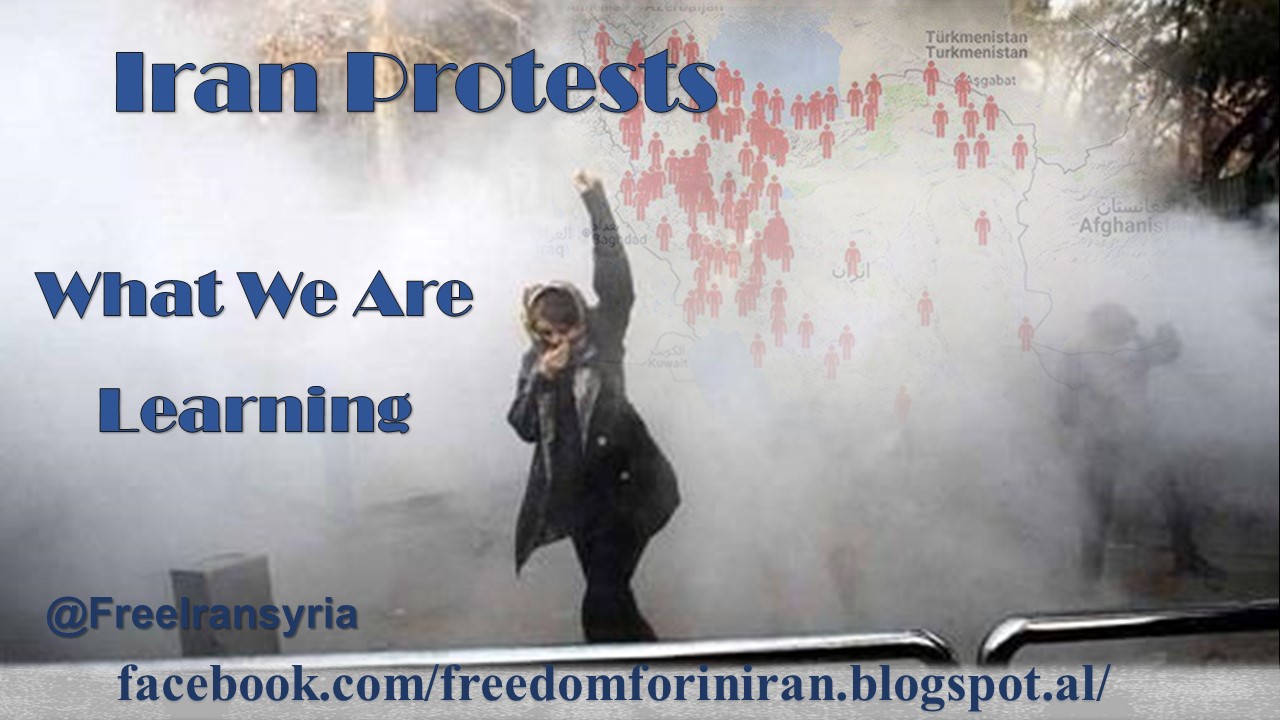
I will post live in this page
******
Reports of new protests in various cities
Oct. 31, 2018 - As reports of continuing protests and strikes arrive from across Iran, clients of the Caspian credit firm, associated to the regime’s Revolutionary Guards (IRGC), rallied outside this institution’s main office building in Tehran and held a protest gathering on Monday morning.
“Caspian has stolen from us, the government is supporting its measures,” the protesters were
Read more
Third day of railway workers’ strikes
Oct. 30, 2018 - On Saturday, various posts on official outlets and social media networks indicated numerous groups of rail workers going on strike, continuing to this day. The state-run ILNA news agency, along with other outlets, were also posting reports in this regard.
As this strike successfully began, Iran’s society is now witnessing yet another group of workers launching a strike. These rail workers are responsible for keeping the country’s rail network up and running 24 hours a day, seven days a week.
Read more
 The prospects of student uprisings in Iran
Oct. 30, 2018 - In recent days, reports have surfaced of student movements supporting the strikes of teachers and truck drivers. Student movements and protests in Iran have historically been closely tied to nationwide uprisings and social and worker-class protests.
The unity between students and workers and other hardworking classes of the Iranian society are not new, and neither are they unique to Iran. All across the world, student protests have had a pivotal role in the society. Some examples include the 1968 protests in France and the student protests in China at the end of the 20th century.
Read more
Despite suppressive measures throngs of people from across Iran flock to Pasargad
Repressive forces block roads, arrest numerous young people and impound vehicles
Despite suppressive measures by the mullahs' regime, throngs of people from Iranian cities and provinces flocked to Pasargad on October 29 to commemorate Cyrus the Great. On Sunday evening and Monday morning, there was heavy traffic, in particular on the roads leading to Pasargad, in Fars Province.
Fearing a protest, suppressive forces had taken suppressive measures in previous days to prevent it from taking place. In addition to the police and secret police, the Revolutionary Guards were on alert in Fars Province and nearby cities.
Read more

Protests held by credit firm clients & retirees in Tehran
Oct. 27, 2018 - Numerous retired bank employees from cities across Iran rallied in Tehran Saturday morning to protest their low pensions. This gathering was held outside the Banks Retiree Fund office
“Our pensions are far below the poverty line,” they were chanting.
“We retired bank employees, in our senior ages, are facing many difficulties. Seeking answers to our demands of having our pensions increased is now added to that,” one protester said, adding conditions have become so poor that the low pensions they receive – a little over 10 million rials (around $110) – does not provide for their needs. The bank retirees’ main concerns are the huge rift between what they receive and the poverty line, especially considering the country’s skyrocketing inflation.
Read more

Increasing protests by clients of regime-linked credit firms
Oct. 27, 2018 - Despite all the repressive measures by the Iranian regime against protest movements and all the protesters arrested, the Iranian people have remained steadfast in their effort to continue the ongoing street demonstrations. This includes clients of regime-linked credit firms demanding their stolen savings eturned.
In Mashhad, northeast Iran, a similar protest was held on Thursday with clients seeking answers to their demands. Fearing this protest gaining force and bystanders joining the ranks of this rally, police units were dispatched to the scene, attacking and arresting a number of the demonstrators. This repressive measure raised protests by people present at the site.
Read more

Protests by students in Tehran, farmers in Isfahan
Women actively participated in recent protest gatherings in Iran
Oct. 22, 2018 - There is a continuous stream of reports of further protests in cities across Iran.
A group of PhD students in Tehran rallied on Monday outside the Iranian regime’s parliament protesting the difficulty to find jobs.
Students of Amir Kabir University in Tehran also rallied on Monday, protesting the college officials’ incompetence. These students also on this day rallied in another location, protesting a decision to cancel exams.
Read more

Latest report on protests & strikes
As the Iranian regime faces new and escalating crises with each passing day, more people from all walks of life are seen holding protest rallies in numerous cities throughout Iran.
In Tehran, a group of Ph.D. students from universities across the country rallied in the country’s capital, protesting the lack of foreign currency based on government rates as promised by education officials. This Saturday rally outside the Ministry of Sciences building was held despite threats issued by education officials
Read more

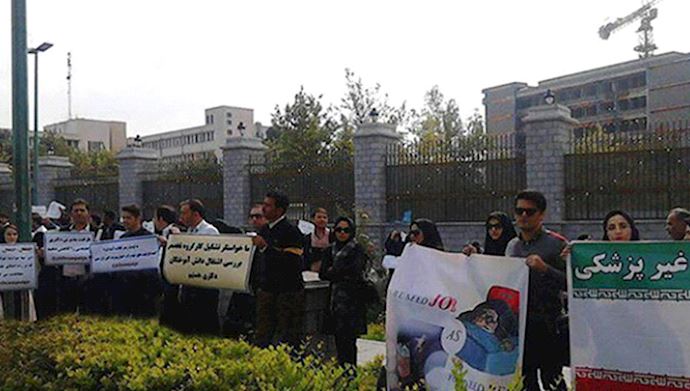
5 international labor unions warn against possible execution of 17 detained truckers
Oct. 20, 2018 - Five labor unions, including International Trade Union Confederation (ITUC), International Transport Workers' Federation (ITF), Education International, Industrial Global Union and The International Union of Food, Agricultural, Hotel, Restaurant (IUF) raised concerns and expressed “deep shock” over the demand of prosecutor general in Qazvin province, central Iran, to execute 17 detained truck drivers arrested during the nationwide strikes that started in early October.
Read more
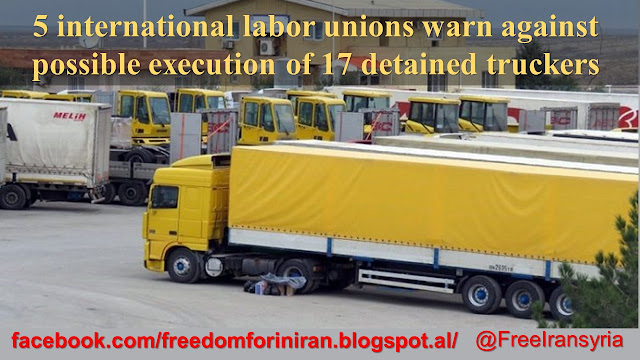
Protest Rally of Retirees against poverty and the dire situation of livelihood and high costs
On the morning of Tuesday, October 16, a large group of retirees protested in front of the regime's program and budget organization in Tehran. Protesters from different provinces, including Fars and Kermanshah, have come to Tehran to demand raising their salaries in line with inflation and the poverty line, implementation of coordinated payment system, balancing their salaries, and paying their efficiency insurance premiums. The crowds chanted slogan: “Imprisoned teachers must be freed, imprisoned students must be freed, prison is not the place for teachers, cry from all this injustice, the poverty line is six million; our salaries are two million.” According to government news agencies, the protesters said that the salaries they receive do not even cover 10 days of their expenses in a month. The regime officials have announced in the past few months that retirees have lost more than two-thirds of their purchasing power. This is despite the fact that their purchasing power has fallen even lower over the past few months.
Read more

Retired employees rallying in Tehran
Retired employees in Tehran gathered from across the country to rally outside the Iranian regime’s Planning and Budget Organization office building. Retired nurses and other Health Ministry employees are also taking part in this protest gathering.
The placards raised at this rally read:
“We have the right to establish our own organizations and hold protest rallies”
“The problems we face include officials’ hollow promises”
“We will continue our efforts until our legal demands are met”
Read more
Protest gatherings in Tehran, Rasht, Takestan with women participating
Women participated actively in protest gatherings held over the past week in Tehran, Rasht and Takestan.
On Wednesday, October 10, 2018, the families of students at the Sama Girls’ School in Takestan held a sit-in protest against illegal and substandard blood taken by a couple of syringes from 40 children by an unidentified person posing as a Red Crescent (Hilal Ahmar) employee.
Read more

U.S. voices support for Iran teachers’ nationwide strike
Oct. 16, 2018 - In a new development, U.S. State Department spokesperson Heather Nauert voiced support for the Iranian teachers’ nationwide strike sweeping across the country on Sunday and Monday. In Iran, schools are open from Saturday to Thursday, and closed only on Fridays.
Read more

UK’s largest education union supports jailed Iranian teachers
The UK’s largest education union, in a letter acquired by Iran News Wire, confirmed its strong support of Iranian teachers, especially those who are jailed in Iran.
“I assure you that the plight of the people, and in particular teachers, of Iran is not forgotten by the National Education Union – NUT Section,”
Samidha Garg, the International Relations Officer of the National Education Union – NUT Section wrote in response to a letter by a human rights activist.
Read more
Truckers Strike Not An Isolated Incident In Iran – OpEd
Iran is faced with a second round of truckers’ strikes this year. It has spread to 290 cities in 31 provinces across the country.
Last round of truckers’ strike was in late July and early August. The demands remain the same because the Iranian regime is offering them a bunch of empty promises. The regime wants the truckers to break their strike and it has made hundreds of arrests so far.
Read more
Protests, strikes spreading across Iran
Iran, Oct. 15, 2018 - As teachers across Iran continue their nationwide strike for the second consecutive day on Monday reaching 103 cities and truckers forced regime officials to succumb to three of their demands after three weeks of strikes, more reports are coming from numerous cities across Iran about people from all walks of life holding a variety of rallies.
In Tehran, clients of the Revolutionary Guards-linked Caspian credit firm rallied outside the Iranian regime’s Central Bank, demanding their stolen money returned.
The protesters were chanting:
Read more
Nationwide sit-ins and strikes of teachers spread to 26 provinces
According to the latest reports, teachers in more than 60 cities across Iran are continuing their nationwide strike for the second consecutive day on Monday, reaching the cities of Mashhad, Marivan, Isfahan, Hamedan, Karaj, Homayounshahr, Shahinshar, Ahvaz, Baneh, Ravansar and many more.
Reports from the cities of Qeshm, Ahvaz, Poldokhtar, Ravansar, Rafsanjan, Zarineh and Babol indicate all teachers are on strike. Their protests have also spread to the cities of Divandareh, Shiraz, Sanandaj, Sari, Langrud, Saqqez, Khomeini Shahr, Kermanshah, and many others.
Read more

Teachers launching a nationwide strike throughout Iran
Maryam Rajavi saluted the striking teachers across the country
On Sunday, October 14, noble teachers across the country went on strike and refused to go to classrooms throughout the country to protest their dire livelihood conditions, repression and security atmosphere in schools, and to achieve their trampled on rights.
Strike and protest of teachers in addition to Tehran, spread to Provinces of Alborz, Isfahan, East Azarbaijan and West Azarbaijan, Fars, Khorasan Razavi, North Khorasan, Kurdistan, Kermanshah, Semnan, Qazvin, Mazandaran, Hamedan, Yazd, Markazi, Lorestan, Ilam, Bushehr, Chahar Mahal And Bakhtiari, and Kohgiluyeh and Boyer Ahmed.
Striking teachers are protesting their low salaries and benefits, living below the poverty line, inflation, excessive high prices and reduced purchasing power, imprisonment of teachers, deprivation from having independent unions, lack of efficient and comprehensive insurance, looting of the teachers trust reserves, failure to implement the Public Service Management Act since 2016, failure to implement the rating plan over the past three years, and the failure to implement the full-time teachers plan, among others. They call for the security of union activists, release of jailed teachers, abolition of internal rules on trade union activists and returning to work of guilds and cultural activists.
The sit-in strikers also object to the violation of the right to free education for all, non-standard and insecure schools, the country's gross drop in education, the low level content of educational books, the density and high number of school students, and the lack of funding required for education in the country.
Mrs. Maryam Rajavi, President-elect of the Iranian Resistance, saluted the noble teachers who have staged sit-ins against the tyranny of the clerical regime, saying: "The catastrophic situation of the employed and retired teachers is the product of the repressive policies of the anti-cultural regime of the mullahs, and as long as this regime is in power, it will even get worse.”
She called the general public, especially the youth, to express solidarity with the educators who face a variety of discrimination and problems, saying that the strike of teachers and academics in the wake of the strike of toiling truck drivers and merchants’ strike last week showed a flare of fury of public anger and hatred toward a regime that has only brought torture and execution, war and terrorism, poverty and unemployment, and corruption and plundering for the people of Iran.
Read more
Iran’s truckers continuing strike for three weeks
Truck drivers across Iran are remaining steadfast on their nationwide strike into Saturday, marking the 21st consecutive day.
Reports indicate regime officials in the Ministry of Road & Construction have been forced to give in to one of the truckers demands. Transfer fees on loads inside the country will be based on the ton/kilometers standard demanded by the drivers.
This paying system has been one of the protesting drivers’ main demands during the past three weeks in their protest movement
Read more

Truck drivers and truck owners across Iran are continuing their massive nationwide strike for the 21th consecutive day on Friday.
Reports indicate this protest movement continuing in various cities including Isfahan, Zarrin Shahr, Rumeshgan, Kermanshah, Shahr-e Kord, and Sirjan.
A significant portion of the steel production line in Mobarakeh of Isfahan Province in central Iran has closed down as a result of the truckers’ strike.
Read more
ITF condemns Iran’s death penalty threats against truckers
An International truckers’ federation today condemned the calls for the execution of detained truck drivers who were on strike in the northwestern province of Qazvin in Iran.
The calls were made by the head of the Qazvin Court four days ago. Mohsen Karami said that they had requested the capital punishment for 17 apprehended people involved in the strike adding that if it was proven that they were “moharebs”, enemies of God, they would be sentenced to heavy punishments such as death.
Read more

Strikes by Iran’s merchants enters its third day
On Wednesday morning, shops in Tehran’s Shahrak-e San’ati were closed in protest to increasing prices, inflation, poverty and other economic grievances. This is the third day of a strike that began on Monday and spread to more than 50 cities and 21 provinces across Iran.
Read more
Iran’s truckers keeping the nationwide uprising alive
With their protests and strikes continuing into the 18th consecutive day on Wednesday, the demands raised by truck drivers across Iran remain nothing but their fundamental rights and paychecks that have been plundered by the mullahs’ regime.
The protesting truckers, numbering into the hundreds of thousands, are demanding an increase in their paychecks, providing spare parts and tires at reasonable prices, drivers receiving their due insurance pensions, a decrease in tariffs imposed on transportation companies, and authorities to take action against corrupt police officers.
Read more
Iran’s truck drivers enter 17th day of nationwide strike
Despite all the pressures imposed by the mullahs’ regime, the hardworking truck drivers of Iran have entered the 17th consecutive day of their massive strike on Tuesday.
Read more
Second day of nationwide strikes by merchants
For the second consecutive day, merchants in several Iranian cities went on strike and refused to open for business in protest to increasing prices, inflation, poverty and other economic grievances that stem from the regime’s corruption. Yesterday, the merchants’ strikes spread to more than 50 cities and 21 provinces across Iran.
Read more
Iran’s mullahs panic from truckers’ strike
The Friday prayers being run every week in Iran’s cities by the representatives of the Iranian regime’s supreme leader, Ali Khamenei, came under an atmosphere of fear this week. Mullahs in different cities revealed their fear from the nationwide truckers’ strike that started on September 23. Iran’s truckers started the movement in protest to the low wages, systematic corruption in state-run terminals and transportation cycle, and also the high cost of spare parts, tire, etc.
Read more
Bazaar merchants and shopkeepers go on strike in Tehran and dozens of other cities
As long as the mullahs are in power, high prices, recession and poverty will continue
Maryam Rajavi commends Iran's protesting bazaar merchants
The only solution is democracy and popular rule
Truck drivers’ strike, despite the arrest of a large number of them, entered its third week
Mrs. Maryam Rajavi's call to support the strikers and take immediate action to release the arrested
On Sunday, October 6, the powerful strike of thousands of drivers of heavy trucks and truckers, despite the constant threats and deceptive promises and strike-breaking actions of the regime, as well as the arrest of a large number of them, entered its third week.
The continuation of this nationwide strike, which has spread to 310 cities from 31 provinces, is while a large number of drivers have been arrested for charges such as "disrupting the flow of transportation and provoking drivers to strike." The arrests took place in the provinces of Tehran, Fars, Isfahan, Khorasan Razavi, Kordestan, Lorestan, West Azarbaijan, Zanjan and Qazvin, Alborz, Hamedan, Chaharmahal and Bakhtiari, Kermanshah, Kerman and Bushehr.
Read more
13th day of truckers’ nationwide strike reaches over 300 cities
Truckers’ strike continues the popular, anti-regime uprising
Oct. 6, 2018 - For two weeks now truck drivers in over 300 cities across Iran have been continuing their nationwide protests. Strikes, protests and the all-out uprising in Iran has transformed into an ongoing movement, placing its impacts on the country’s political spectrum on a daily basis.
During the past few days, despite threats and other measures resorted to by the authorities, and despite the fact that over 170 protesting drivers have been arrested, in addition to all the difficulties for those bravely joining this strike, the courageous truck drivers of Iran are continuing their protest movement, showing no sign of succumbing to the regime’s demands.
Read more

Alriyadhdaily-ITF statement on Iran truckers’ strike
In the second week of a nationwide strike of trucker in Iran , the International Transport Workers’ Federation (ITF) issued a statement supporting demands of truckers:
Truckers get ITF solidarity statement on behalf of 20 million transport workers worldwide.
Getting ITF solidarity statement means Iran’s truckers on strike have been heard internationally. This is what the protests from December 2017 have been about. Iranians are proving they will not back down on their civil rights.
The ITF is extremely concerned that news emerging from Iran has detailed a large number of driver arrests. Around 150 truck drivers in various provinces have reportedly been detained for participating in the action, with a spokesperson for the judiciary threatening “heavy punishment.”
Read more

12th day of truckers’ nationwide strike
Thursday witnessed the nationwide strike launched by thousands of truck drivers across Iran expand to 289 cities in all of the country’s 31 provinces.
Authorities are continuing their measures against this movement. In Arak, central Iran, police ordered the closure of a local drivers’ association after their members joined the nationwide strike. Truckers are showing bravery and refusing to succumb to any demands or threats raised by the Iranian regime’s officials and authorities.
Read more

Teamsters Support Iran Truckers
The American Teamsters union have voiced their support for the striking truck drivers in Iran for a second time this year in an open letter to the Deputy Director of Iran’s interests in the US, Abolfazl Mehrabadi and urged the Iranian Regime to listen to the demands of the striking workers.
The International Brotherhood of Teamsters, which has 1.4 million members in the US and Canada, published their letter, written by General President James P. Hoffa, on Twitter, utilising the hashtag #SupportIranTruckers.
The letter read: “We urge the government of Iran to listen to the grievance of striking Iranian truck drivers, address their just demands and recognize their internationally recognized rights to assembly, speech, freedom of association and collective bargaining.”
Read more
Iran’s regime fears PMOI/MEK connection to ongoing strikes/protests
October 2, 2018 - The Iranian regime, terrified of the Iranian opposition People's Mojahedin Organization of Iran (PMOI/MEK) linking with the ongoing protests and strikes across the country, is resorting to deceptive and oppressive measures against Iran’s protesters.
“Truckers must know that the [social media] channels that distribute these calls for protests and strikes are linked to the [PMOI/MEK] and the anti-revolution fronts. They have provoked a few people on Telegram and other social media networks, to throw rocks and place road blocks, disrupting the truckers’ activities and even scaring them,” said the political deputy of Khorasan Razavi Province in northeast Iran.
Read more
Oct. 1, 2018 -Reports of new protests in various cities
Oct. 31, 2018 - As reports of continuing protests and strikes arrive from across Iran, clients of the Caspian credit firm, associated to the regime’s Revolutionary Guards (IRGC), rallied outside this institution’s main office building in Tehran and held a protest gathering on Monday morning.
“Caspian has stolen from us, the government is supporting its measures,” the protesters were
Read more
Third day of railway workers’ strikes
Oct. 30, 2018 - On Saturday, various posts on official outlets and social media networks indicated numerous groups of rail workers going on strike, continuing to this day. The state-run ILNA news agency, along with other outlets, were also posting reports in this regard.
As this strike successfully began, Iran’s society is now witnessing yet another group of workers launching a strike. These rail workers are responsible for keeping the country’s rail network up and running 24 hours a day, seven days a week.
Read more

Oct. 30, 2018 - In recent days, reports have surfaced of student movements supporting the strikes of teachers and truck drivers. Student movements and protests in Iran have historically been closely tied to nationwide uprisings and social and worker-class protests.
The unity between students and workers and other hardworking classes of the Iranian society are not new, and neither are they unique to Iran. All across the world, student protests have had a pivotal role in the society. Some examples include the 1968 protests in France and the student protests in China at the end of the 20th century.
Read more
Despite suppressive measures throngs of people from across Iran flock to Pasargad
Repressive forces block roads, arrest numerous young people and impound vehicles
Despite suppressive measures by the mullahs' regime, throngs of people from Iranian cities and provinces flocked to Pasargad on October 29 to commemorate Cyrus the Great. On Sunday evening and Monday morning, there was heavy traffic, in particular on the roads leading to Pasargad, in Fars Province.
Fearing a protest, suppressive forces had taken suppressive measures in previous days to prevent it from taking place. In addition to the police and secret police, the Revolutionary Guards were on alert in Fars Province and nearby cities.
Read more

Protests held by credit firm clients & retirees in Tehran
Oct. 27, 2018 - Numerous retired bank employees from cities across Iran rallied in Tehran Saturday morning to protest their low pensions. This gathering was held outside the Banks Retiree Fund office
“Our pensions are far below the poverty line,” they were chanting.
“We retired bank employees, in our senior ages, are facing many difficulties. Seeking answers to our demands of having our pensions increased is now added to that,” one protester said, adding conditions have become so poor that the low pensions they receive – a little over 10 million rials (around $110) – does not provide for their needs. The bank retirees’ main concerns are the huge rift between what they receive and the poverty line, especially considering the country’s skyrocketing inflation.
Read more

Increasing protests by clients of regime-linked credit firms
Oct. 27, 2018 - Despite all the repressive measures by the Iranian regime against protest movements and all the protesters arrested, the Iranian people have remained steadfast in their effort to continue the ongoing street demonstrations. This includes clients of regime-linked credit firms demanding their stolen savings eturned.
In Mashhad, northeast Iran, a similar protest was held on Thursday with clients seeking answers to their demands. Fearing this protest gaining force and bystanders joining the ranks of this rally, police units were dispatched to the scene, attacking and arresting a number of the demonstrators. This repressive measure raised protests by people present at the site.
Read more

Protests by students in Tehran, farmers in Isfahan
Women actively participated in recent protest gatherings in Iran
Oct. 22, 2018 - There is a continuous stream of reports of further protests in cities across Iran.
A group of PhD students in Tehran rallied on Monday outside the Iranian regime’s parliament protesting the difficulty to find jobs.
Students of Amir Kabir University in Tehran also rallied on Monday, protesting the college officials’ incompetence. These students also on this day rallied in another location, protesting a decision to cancel exams.
Read more
Latest report on protests & strikes
As the Iranian regime faces new and escalating crises with each passing day, more people from all walks of life are seen holding protest rallies in numerous cities throughout Iran.
In Tehran, a group of Ph.D. students from universities across the country rallied in the country’s capital, protesting the lack of foreign currency based on government rates as promised by education officials. This Saturday rally outside the Ministry of Sciences building was held despite threats issued by education officials
Read more

5 international labor unions warn against possible execution of 17 detained truckers
Oct. 20, 2018 - Five labor unions, including International Trade Union Confederation (ITUC), International Transport Workers' Federation (ITF), Education International, Industrial Global Union and The International Union of Food, Agricultural, Hotel, Restaurant (IUF) raised concerns and expressed “deep shock” over the demand of prosecutor general in Qazvin province, central Iran, to execute 17 detained truck drivers arrested during the nationwide strikes that started in early October.
Read more

Protest Rally of Retirees against poverty and the dire situation of livelihood and high costs
On the morning of Tuesday, October 16, a large group of retirees protested in front of the regime's program and budget organization in Tehran. Protesters from different provinces, including Fars and Kermanshah, have come to Tehran to demand raising their salaries in line with inflation and the poverty line, implementation of coordinated payment system, balancing their salaries, and paying their efficiency insurance premiums. The crowds chanted slogan: “Imprisoned teachers must be freed, imprisoned students must be freed, prison is not the place for teachers, cry from all this injustice, the poverty line is six million; our salaries are two million.” According to government news agencies, the protesters said that the salaries they receive do not even cover 10 days of their expenses in a month. The regime officials have announced in the past few months that retirees have lost more than two-thirds of their purchasing power. This is despite the fact that their purchasing power has fallen even lower over the past few months.
Read more

Retired employees rallying in Tehran
Retired employees in Tehran gathered from across the country to rally outside the Iranian regime’s Planning and Budget Organization office building. Retired nurses and other Health Ministry employees are also taking part in this protest gathering.
The placards raised at this rally read:
“We have the right to establish our own organizations and hold protest rallies”
“The problems we face include officials’ hollow promises”
“We will continue our efforts until our legal demands are met”
Read more
Protest gatherings in Tehran, Rasht, Takestan with women participating
Women participated actively in protest gatherings held over the past week in Tehran, Rasht and Takestan.
On Wednesday, October 10, 2018, the families of students at the Sama Girls’ School in Takestan held a sit-in protest against illegal and substandard blood taken by a couple of syringes from 40 children by an unidentified person posing as a Red Crescent (Hilal Ahmar) employee.
Read more

U.S. voices support for Iran teachers’ nationwide strike
Oct. 16, 2018 - In a new development, U.S. State Department spokesperson Heather Nauert voiced support for the Iranian teachers’ nationwide strike sweeping across the country on Sunday and Monday. In Iran, schools are open from Saturday to Thursday, and closed only on Fridays.
Read more

UK’s largest education union supports jailed Iranian teachers
The UK’s largest education union, in a letter acquired by Iran News Wire, confirmed its strong support of Iranian teachers, especially those who are jailed in Iran.
“I assure you that the plight of the people, and in particular teachers, of Iran is not forgotten by the National Education Union – NUT Section,”
Samidha Garg, the International Relations Officer of the National Education Union – NUT Section wrote in response to a letter by a human rights activist.
Read more
Danish Drivers' Union, with 50,000 members, express solidarity with the striking truck drivers in Ir
Truckers Strike Not An Isolated Incident In Iran – OpEd
Iran is faced with a second round of truckers’ strikes this year. It has spread to 290 cities in 31 provinces across the country.
Last round of truckers’ strike was in late July and early August. The demands remain the same because the Iranian regime is offering them a bunch of empty promises. The regime wants the truckers to break their strike and it has made hundreds of arrests so far.
Read more
Protests, strikes spreading across Iran
Iran, Oct. 15, 2018 - As teachers across Iran continue their nationwide strike for the second consecutive day on Monday reaching 103 cities and truckers forced regime officials to succumb to three of their demands after three weeks of strikes, more reports are coming from numerous cities across Iran about people from all walks of life holding a variety of rallies.
In Tehran, clients of the Revolutionary Guards-linked Caspian credit firm rallied outside the Iranian regime’s Central Bank, demanding their stolen money returned.
The protesters were chanting:
Read more
Nationwide sit-ins and strikes of teachers spread to 26 provinces
According to the latest reports, teachers in more than 60 cities across Iran are continuing their nationwide strike for the second consecutive day on Monday, reaching the cities of Mashhad, Marivan, Isfahan, Hamedan, Karaj, Homayounshahr, Shahinshar, Ahvaz, Baneh, Ravansar and many more.
Reports from the cities of Qeshm, Ahvaz, Poldokhtar, Ravansar, Rafsanjan, Zarineh and Babol indicate all teachers are on strike. Their protests have also spread to the cities of Divandareh, Shiraz, Sanandaj, Sari, Langrud, Saqqez, Khomeini Shahr, Kermanshah, and many others.
Read more

Teachers launching a nationwide strike throughout Iran
Maryam Rajavi saluted the striking teachers across the country
On Sunday, October 14, noble teachers across the country went on strike and refused to go to classrooms throughout the country to protest their dire livelihood conditions, repression and security atmosphere in schools, and to achieve their trampled on rights.
Strike and protest of teachers in addition to Tehran, spread to Provinces of Alborz, Isfahan, East Azarbaijan and West Azarbaijan, Fars, Khorasan Razavi, North Khorasan, Kurdistan, Kermanshah, Semnan, Qazvin, Mazandaran, Hamedan, Yazd, Markazi, Lorestan, Ilam, Bushehr, Chahar Mahal And Bakhtiari, and Kohgiluyeh and Boyer Ahmed.
Striking teachers are protesting their low salaries and benefits, living below the poverty line, inflation, excessive high prices and reduced purchasing power, imprisonment of teachers, deprivation from having independent unions, lack of efficient and comprehensive insurance, looting of the teachers trust reserves, failure to implement the Public Service Management Act since 2016, failure to implement the rating plan over the past three years, and the failure to implement the full-time teachers plan, among others. They call for the security of union activists, release of jailed teachers, abolition of internal rules on trade union activists and returning to work of guilds and cultural activists.
The sit-in strikers also object to the violation of the right to free education for all, non-standard and insecure schools, the country's gross drop in education, the low level content of educational books, the density and high number of school students, and the lack of funding required for education in the country.
Mrs. Maryam Rajavi, President-elect of the Iranian Resistance, saluted the noble teachers who have staged sit-ins against the tyranny of the clerical regime, saying: "The catastrophic situation of the employed and retired teachers is the product of the repressive policies of the anti-cultural regime of the mullahs, and as long as this regime is in power, it will even get worse.”
She called the general public, especially the youth, to express solidarity with the educators who face a variety of discrimination and problems, saying that the strike of teachers and academics in the wake of the strike of toiling truck drivers and merchants’ strike last week showed a flare of fury of public anger and hatred toward a regime that has only brought torture and execution, war and terrorism, poverty and unemployment, and corruption and plundering for the people of Iran.
Read more
Truck drivers across Iran are remaining steadfast on their nationwide strike into Saturday, marking the 21st consecutive day.
Reports indicate regime officials in the Ministry of Road & Construction have been forced to give in to one of the truckers demands. Transfer fees on loads inside the country will be based on the ton/kilometers standard demanded by the drivers.
This paying system has been one of the protesting drivers’ main demands during the past three weeks in their protest movement
Read more

Truck drivers and truck owners across Iran are continuing their massive nationwide strike for the 21th consecutive day on Friday.
Reports indicate this protest movement continuing in various cities including Isfahan, Zarrin Shahr, Rumeshgan, Kermanshah, Shahr-e Kord, and Sirjan.
A significant portion of the steel production line in Mobarakeh of Isfahan Province in central Iran has closed down as a result of the truckers’ strike.
Read more
ITF condemns Iran’s death penalty threats against truckers
An International truckers’ federation today condemned the calls for the execution of detained truck drivers who were on strike in the northwestern province of Qazvin in Iran.
The calls were made by the head of the Qazvin Court four days ago. Mohsen Karami said that they had requested the capital punishment for 17 apprehended people involved in the strike adding that if it was proven that they were “moharebs”, enemies of God, they would be sentenced to heavy punishments such as death.
Read more

Strikes by Iran’s merchants enters its third day
On Wednesday morning, shops in Tehran’s Shahrak-e San’ati were closed in protest to increasing prices, inflation, poverty and other economic grievances. This is the third day of a strike that began on Monday and spread to more than 50 cities and 21 provinces across Iran.
Read more
Iran’s truckers keeping the nationwide uprising alive
With their protests and strikes continuing into the 18th consecutive day on Wednesday, the demands raised by truck drivers across Iran remain nothing but their fundamental rights and paychecks that have been plundered by the mullahs’ regime.
The protesting truckers, numbering into the hundreds of thousands, are demanding an increase in their paychecks, providing spare parts and tires at reasonable prices, drivers receiving their due insurance pensions, a decrease in tariffs imposed on transportation companies, and authorities to take action against corrupt police officers.
Read more
Iran’s truck drivers enter 17th day of nationwide strike
Despite all the pressures imposed by the mullahs’ regime, the hardworking truck drivers of Iran have entered the 17th consecutive day of their massive strike on Tuesday.
Read more
Second day of nationwide strikes by merchants
For the second consecutive day, merchants in several Iranian cities went on strike and refused to open for business in protest to increasing prices, inflation, poverty and other economic grievances that stem from the regime’s corruption. Yesterday, the merchants’ strikes spread to more than 50 cities and 21 provinces across Iran.
Read more
Iran’s mullahs panic from truckers’ strike
The Friday prayers being run every week in Iran’s cities by the representatives of the Iranian regime’s supreme leader, Ali Khamenei, came under an atmosphere of fear this week. Mullahs in different cities revealed their fear from the nationwide truckers’ strike that started on September 23. Iran’s truckers started the movement in protest to the low wages, systematic corruption in state-run terminals and transportation cycle, and also the high cost of spare parts, tire, etc.
Read more
Bazaar merchants and shopkeepers go on strike in Tehran and dozens of other cities
As long as the mullahs are in power, high prices, recession and poverty will continue
Maryam Rajavi commends Iran's protesting bazaar merchants
The only solution is democracy and popular rule
Truck drivers’ strike, despite the arrest of a large number of them, entered its third week
Mrs. Maryam Rajavi's call to support the strikers and take immediate action to release the arrested
On Sunday, October 6, the powerful strike of thousands of drivers of heavy trucks and truckers, despite the constant threats and deceptive promises and strike-breaking actions of the regime, as well as the arrest of a large number of them, entered its third week.
The continuation of this nationwide strike, which has spread to 310 cities from 31 provinces, is while a large number of drivers have been arrested for charges such as "disrupting the flow of transportation and provoking drivers to strike." The arrests took place in the provinces of Tehran, Fars, Isfahan, Khorasan Razavi, Kordestan, Lorestan, West Azarbaijan, Zanjan and Qazvin, Alborz, Hamedan, Chaharmahal and Bakhtiari, Kermanshah, Kerman and Bushehr.
Read more
13th day of truckers’ nationwide strike reaches over 300 cities
Truckers’ strike continues the popular, anti-regime uprising
Oct. 6, 2018 - For two weeks now truck drivers in over 300 cities across Iran have been continuing their nationwide protests. Strikes, protests and the all-out uprising in Iran has transformed into an ongoing movement, placing its impacts on the country’s political spectrum on a daily basis.
During the past few days, despite threats and other measures resorted to by the authorities, and despite the fact that over 170 protesting drivers have been arrested, in addition to all the difficulties for those bravely joining this strike, the courageous truck drivers of Iran are continuing their protest movement, showing no sign of succumbing to the regime’s demands.
Read more

Alriyadhdaily-ITF statement on Iran truckers’ strike
In the second week of a nationwide strike of trucker in Iran , the International Transport Workers’ Federation (ITF) issued a statement supporting demands of truckers:
Truckers get ITF solidarity statement on behalf of 20 million transport workers worldwide.
Getting ITF solidarity statement means Iran’s truckers on strike have been heard internationally. This is what the protests from December 2017 have been about. Iranians are proving they will not back down on their civil rights.
The ITF is extremely concerned that news emerging from Iran has detailed a large number of driver arrests. Around 150 truck drivers in various provinces have reportedly been detained for participating in the action, with a spokesperson for the judiciary threatening “heavy punishment.”
Read more

12th day of truckers’ nationwide strike
Thursday witnessed the nationwide strike launched by thousands of truck drivers across Iran expand to 289 cities in all of the country’s 31 provinces.
Authorities are continuing their measures against this movement. In Arak, central Iran, police ordered the closure of a local drivers’ association after their members joined the nationwide strike. Truckers are showing bravery and refusing to succumb to any demands or threats raised by the Iranian regime’s officials and authorities.
Read more

Teamsters Support Iran Truckers
The American Teamsters union have voiced their support for the striking truck drivers in Iran for a second time this year in an open letter to the Deputy Director of Iran’s interests in the US, Abolfazl Mehrabadi and urged the Iranian Regime to listen to the demands of the striking workers.
The International Brotherhood of Teamsters, which has 1.4 million members in the US and Canada, published their letter, written by General President James P. Hoffa, on Twitter, utilising the hashtag #SupportIranTruckers.
The letter read: “We urge the government of Iran to listen to the grievance of striking Iranian truck drivers, address their just demands and recognize their internationally recognized rights to assembly, speech, freedom of association and collective bargaining.”
Read more
Iran’s regime fears PMOI/MEK connection to ongoing strikes/protests
October 2, 2018 - The Iranian regime, terrified of the Iranian opposition People's Mojahedin Organization of Iran (PMOI/MEK) linking with the ongoing protests and strikes across the country, is resorting to deceptive and oppressive measures against Iran’s protesters.
“Truckers must know that the [social media] channels that distribute these calls for protests and strikes are linked to the [PMOI/MEK] and the anti-revolution fronts. They have provoked a few people on Telegram and other social media networks, to throw rocks and place road blocks, disrupting the truckers’ activities and even scaring them,” said the political deputy of Khorasan Razavi Province in northeast Iran.
Read more
Thousands of truckers continue nationwide strike for 9th day
The truck drivers’ nationwide strike in Iran entered its 9th consecutive day on Monday, spreading to new cities and the four corners of the country. Despite the fact that Iranian regime authorities arrested over 120 of the protesting drivers, parallel to the mullahs’ judiciary authorities and the Revolutionary Guards (IRGC) resorting to voicing verbal threats, the drivers are courageously continuing their strike and paying no attention to the regime’s threatening measures.
Read more
Officials threaten to execute protesting truckers
Oct. 1, 2018 - The truck drivers’ nationwide strike has continued into the ninth consecutive day on Monday, Oct 1st reaching hundreds of cities nationwide.
More than 120 protesting truck drivers have been arrested, and the regime’s judiciary officials and Revolutionary Guards (IRGC) are continuously resorting to threats of arrests and executions. The brave truck drivers are refusing to succumb to these measures and the protest strike continues.
Starting on September 22nd the protest strike has spread to more than 258 cities in all 31 provinces to this day. The drivers are protesting low paychecks, skyrocketing spare parts prices and hollow promises provided by the mullahs’ officials and authorities.
Read more

People from all walks of life voicing support for truckers’ nationwide strike
On the second week of the nationwide strike that has spread to over 250 cities in all of the country’s 31 provinces, people from various branches of society are expressing their support for the truckers’ continuing protests.
Read more